





Cardiovascular Health
There are a selection of essential healthcare products to help you monitor and manage your cardiovascular health. Among the most crucial tools in maintaining a healthy heart is a blood pressure monitor. Here, we will explore the importance of blood pressure monitoring and provide insights into considerations when buying one.
Blood Pressure: The Key to Heart Health
Blood pressure is a vital metric in assessing cardiovascular health. It measures the force of blood against the walls of your arteries. Monitoring your blood pressure regularly is essential for:
|
 |
Types of Blood Pressure Monitors: Selecting the Right One
Blood pressure monitors come in various types, each with its own advantages. The main categories are:
 |
|
Considerations When Buying a Blood Pressure Monitor
When choosing a blood pressure monitor, consider the following factors:
-
Cuff Size: Ensure the cuff size fits your arm or wrist correctly to obtain accurate readings.
-
Accuracy: Opt for a monitor that has been clinically validated for accuracy.
-
Ease of Use: Choose a monitor that is user-friendly and easy to operate, especially if you'll be using it independently.
-
Memory Function: Some monitors store previous readings, which can be helpful for tracking your blood pressure over time.
-
Portability: Consider whether you need a monitor that can be easily carried with you.
-
Power Source: Check whether the monitor uses batteries or an AC adapter for power.
Regular Monitoring for a Healthy Heart
To maintain optimal cardiovascular health, it's essential to monitor your blood pressure regularly. For those with hypertension, your doctor may recommend more frequent checks. Consistent monitoring empowers you to take control of your heart health and make informed decisions to prevent cardiovascular issues.
Monitoring Cardiovascular Health with Mobility2You
At Mobility2You, we prioritize your cardiovascular health and offer a selection of accurate and user-friendly blood pressure monitors. Explore our range and choose the monitor that best aligns with your specific needs.
If you are unsure which one is most suitable for you, simply reach out and we'll see if we can help.
FAQs
Why should I choose an upper arm blood pressure monitor instead of a wrist model?Upper arm monitors are generally preferred for home use because they’re easier to position correctly and often provide more consistent readings than wrist monitors. How accurate is a digital upper arm blood pressure monitor?When used correctly (proper cuff size, correct positioning, and sitting calmly), digital upper arm monitors can provide reliable readings for everyday home monitoring. What cuff size do I need?Cuff size depends on your upper arm circumference. Measure around your upper arm and choose a cuff that matches your measurement range for better comfort and accuracy. Is it easy to use if I’m not tech-savvy?Yes. Most digital upper arm BP monitors are designed for simple home use, typically with straightforward controls and a clear display. How do I take a blood pressure reading correctly at home?Sit relaxed with your back supported, feet flat on the floor, and arm resting at heart level. Avoid talking, stay still, and take the measurement after resting for a few minutes. How often should I measure my blood pressure?Many people measure once or twice daily for tracking (often morning and evening), but it’s best to follow your healthcare professional’s advice for your situation. Can I track my results over time?Yes, home monitoring helps you notice patterns over time. If your monitor includes memory storage, it can be even easier to compare readings and share them with a professional. What do systolic and diastolic numbers mean?Systolic is the top number (pressure when the heart beats) and diastolic is the bottom number (pressure when the heart rests). Your monitor displays both, usually along with pulse rate. Why do my readings change from one measurement to the next?Small variations are normal. Stress, movement, caffeine, exercise, posture, or taking the reading too soon after activity can affect results. Try measuring at the same time each day under similar conditions. When should I contact a healthcare professional about my readings?If you consistently get unusually high or low readings, feel unwell, or your results concern you, contact a healthcare professional. A home monitor supports tracking, but it doesn’t replace medical advice. |
-
Digital Upper Arm Blood Pressure Monitor
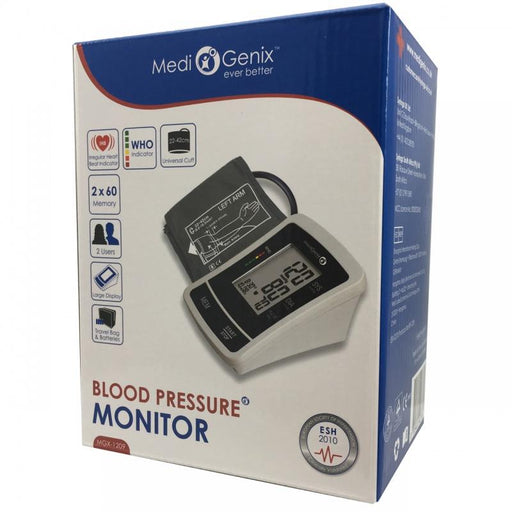
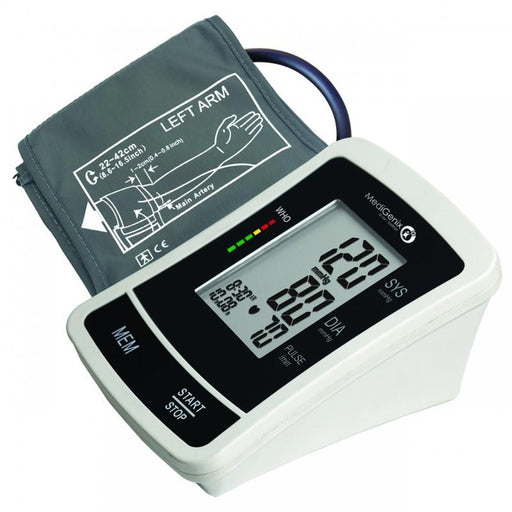
MedigenixOriginal price £19.95Original price £19.95 - Original price £19.95Original price £19.95Current price £18.00£18.00 - £18.00Current price £18.00Low stockMediGenix Upper Arm Blood Pressure Monitor is very user-friendly and practical. With ESH validation you know it's also extremely reliable. Why is ...
View full detailsOriginal price £19.95Original price £19.95 - Original price £19.95Original price £19.95Current price £18.00£18.00 - £18.00Current price £18.00Save £1.95
There are a selection of essential healthcare products to help you monitor and manage your cardiovascular health. Among the most crucial tools in maintaining a healthy heart is a blood pressure monitor. Here, we will explore the importance of blood pressure monitoring and provide insights into considerations when buying one.
Blood Pressure: The Key to Heart Health
Blood pressure is a vital metric in assessing cardiovascular health. It measures the force of blood against the walls of your arteries. Monitoring your blood pressure regularly is essential for:
|
|
Types of Blood Pressure Monitors: Selecting the Right One
Blood pressure monitors come in various types, each with its own advantages. The main categories are:
|
|
Considerations When Buying a Blood Pressure Monitor
When choosing a blood pressure monitor, consider the following factors:
-
Cuff Size: Ensure the cuff size fits your arm or wrist correctly to obtain accurate readings.
-
Accuracy: Opt for a monitor that has been clinically validated for accuracy.
-
Ease of Use: Choose a monitor that is user-friendly and easy to operate, especially if you'll be using it independently.
-
Memory Function: Some monitors store previous readings, which can be helpful for tracking your blood pressure over time.
-
Portability: Consider whether you need a monitor that can be easily carried with you.
-
Power Source: Check whether the monitor uses batteries or an AC adapter for power.
Regular Monitoring for a Healthy Heart
To maintain optimal cardiovascular health, it's essential to monitor your blood pressure regularly. For those with hypertension, your doctor may recommend more frequent checks. Consistent monitoring empowers you to take control of your heart health and make informed decisions to prevent cardiovascular issues.
Monitoring Cardiovascular Health with Mobility2You
At Mobility2You, we prioritize your cardiovascular health and offer a selection of accurate and user-friendly blood pressure monitors. Explore our range and choose the monitor that best aligns with your specific needs.
If you are unsure which one is most suitable for you, simply reach out and we'll see if we can help.
FAQs
Why should I choose an upper arm blood pressure monitor instead of a wrist model?Upper arm monitors are generally preferred for home use because they’re easier to position correctly and often provide more consistent readings than wrist monitors. How accurate is a digital upper arm blood pressure monitor?When used correctly (proper cuff size, correct positioning, and sitting calmly), digital upper arm monitors can provide reliable readings for everyday home monitoring. What cuff size do I need?Cuff size depends on your upper arm circumference. Measure around your upper arm and choose a cuff that matches your measurement range for better comfort and accuracy. Is it easy to use if I’m not tech-savvy?Yes. Most digital upper arm BP monitors are designed for simple home use, typically with straightforward controls and a clear display. How do I take a blood pressure reading correctly at home?Sit relaxed with your back supported, feet flat on the floor, and arm resting at heart level. Avoid talking, stay still, and take the measurement after resting for a few minutes. How often should I measure my blood pressure?Many people measure once or twice daily for tracking (often morning and evening), but it’s best to follow your healthcare professional’s advice for your situation. Can I track my results over time?Yes, home monitoring helps you notice patterns over time. If your monitor includes memory storage, it can be even easier to compare readings and share them with a professional. What do systolic and diastolic numbers mean?Systolic is the top number (pressure when the heart beats) and diastolic is the bottom number (pressure when the heart rests). Your monitor displays both, usually along with pulse rate. Why do my readings change from one measurement to the next?Small variations are normal. Stress, movement, caffeine, exercise, posture, or taking the reading too soon after activity can affect results. Try measuring at the same time each day under similar conditions. When should I contact a healthcare professional about my readings?If you consistently get unusually high or low readings, feel unwell, or your results concern you, contact a healthcare professional. A home monitor supports tracking, but it doesn’t replace medical advice. |